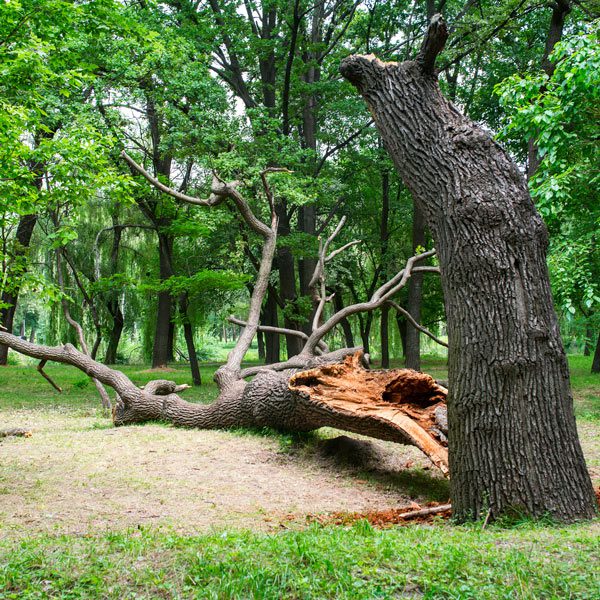
If you’ve lived through a Wellington winter, you don’t need convincing that our wind is in a league of its own. Southerlies and northwesterlies barrel across the harbour and funnel through the hills, and when they hit a tree that’s already carrying a weakness, that’s when limbs come down on roofs, cars and power lines. The good news is that a lot of storm damage is preventable — if the work is done before the weather arrives, not after.
Why prevention beats reaction here
In flatter, more sheltered parts of the country a homeowner can often get away with leaving a tree alone for years. Wellington doesn’t give you that grace. Our exposed, sloping sections load trees with constant wind stress, and a canopy that’s too dense acts like a sail — the more wind it catches, the more force goes through the trunk, roots and branch unions. Thinning that canopy so wind can pass through is one of the most effective things you can do to keep a tree standing.
Crown thinning to cut sail area
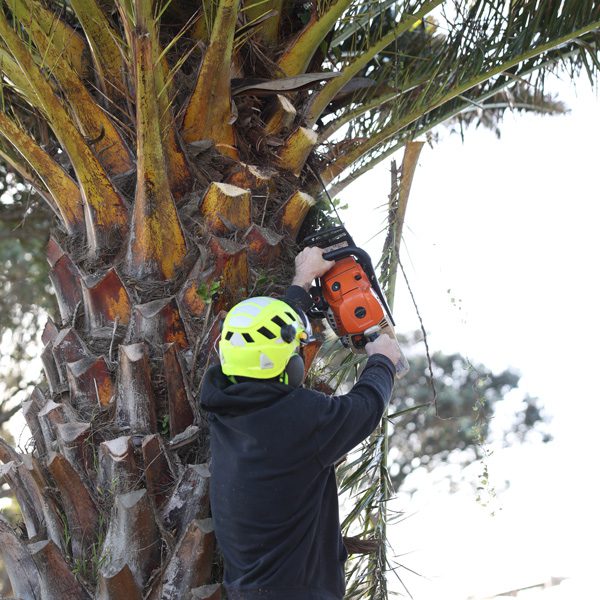
Selective crown thinning removes a portion of the smaller branches throughout the canopy, letting wind flow through rather than push against the whole tree. Done properly it keeps the tree’s natural shape while noticeably reducing the load in a blow. This is skilled work — it’s not the same as lopping or topping, which actually makes a tree more dangerous by triggering weak, dense regrowth.
Deadwooding and spotting weak points
Dead branches are the first thing to come down in a storm, so removing them ahead of time takes the easiest hazard off the table. While we’re up in the tree we’re also looking for the warning signs that a whole limb — or the whole tree — might be at risk:
- Cracks or splits in the trunk or major limbs
- Weak, tight V-shaped unions where two stems meet
- Fungal brackets at the base or on the trunk
- A new or worsening lean, or soil lifting around the roots
- Large, heavy limbs overhanging the house, driveway or a neighbour’s property
A quick pre-winter checklist
You can do a first pass yourself from the ground. Walk around each tree and look up: is there obvious deadwood, a limb hanging over the roof, or a canopy so thick you can’t see through it? Check the base for mushrooms or bracket fungi, and look at the soil on the uphill and downhill sides for any sign of movement. Anything that gives you pause is worth having assessed.
When to bring in a professional
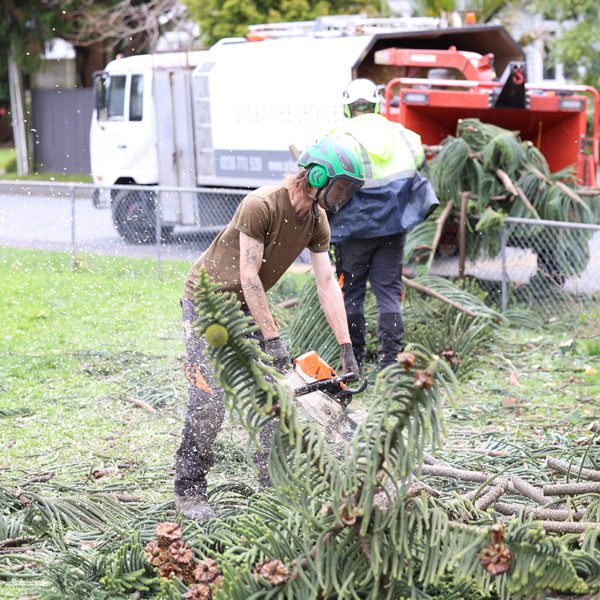
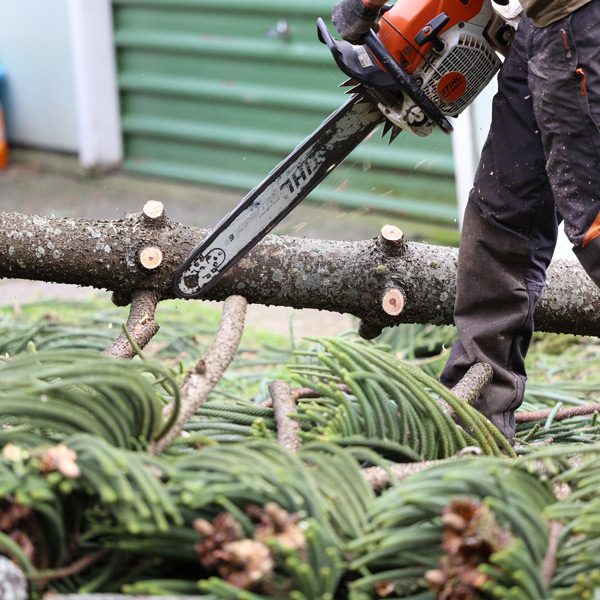
Ground-level checks catch the obvious problems, but the ones that cause the worst failures — decay inside a union, a compromised root plate — usually need a trained eye up in the canopy. If you’ve got large trees near the house, it’s worth a professional assessment before winter sets in properly. And if a storm does catch you out, we respond quickly to make dangerous trees safe. Get in touch for a free assessment on 027 203 1446, or request a quote online.